Mobile Payment in Morocco: The Ultimate Guide to Adapting Your E-commerce to Wallets
Published on February 9, 2026
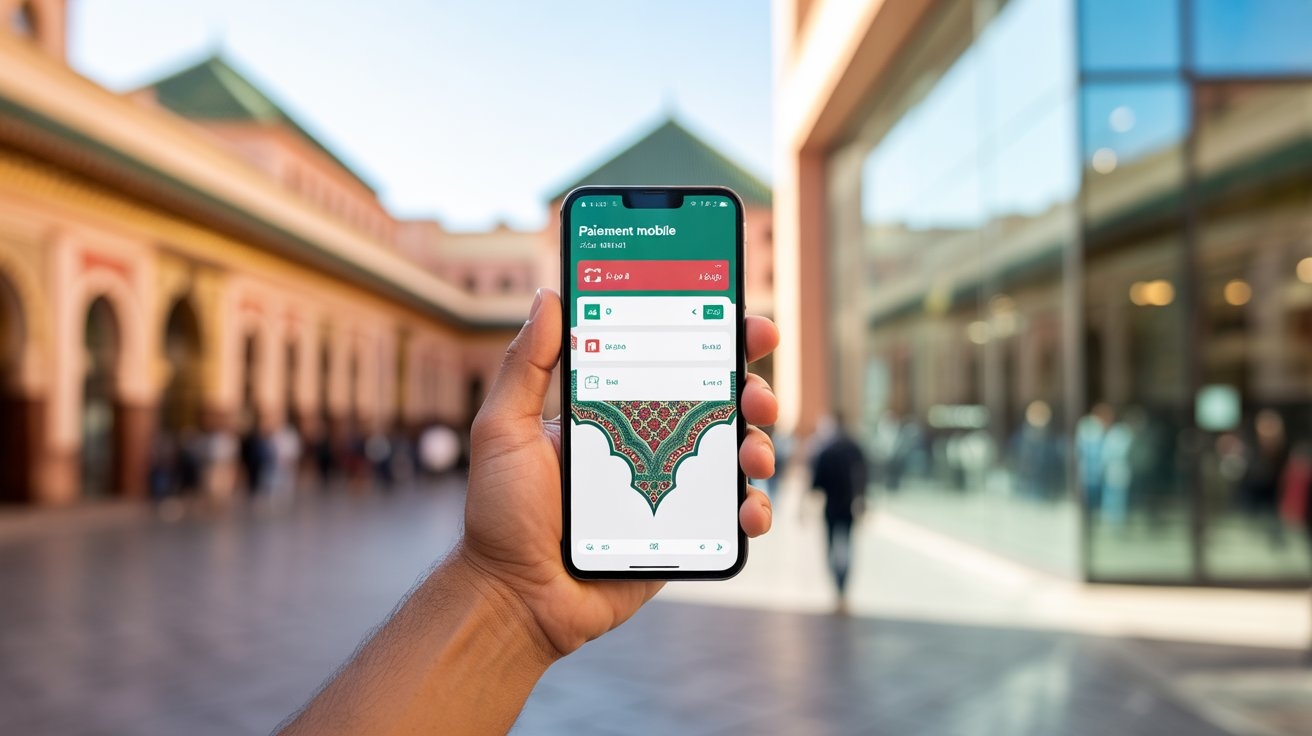
Did you know that in Morocco, the number of electronic wallets (m-wallets) has exploded to exceed 10 million open accounts in recent years? If you still think that "Cash on Delivery" is the sole king, you risk missing out on a silent but lightning-fast revolution.
Mobile payment in Morocco is no longer just a futuristic trend; it is an economic reality driven by Bank Al-Maghrib and the massive adoption of smartphones. For an e-merchant, ignoring this payment method is like closing your shop an hour early: you are foolishly losing sales.
In this article, we will explore how integrating wallets can transform your conversion rate, secure your cash flow, and build loyalty with an increasingly connected clientele. Ready to digitize your sales funnel? Let’s go.
OVERVIEW OF THE MAIN TOPIC: The M-Wallet Ecosystem
Before diving into the technical side, it is crucial to understand what we are talking about. Mobile payment in Morocco, often referred to as "M-Wallet," allows users to make payments, transfers, and bill settlements directly from their smartphone, without needing a traditional bank account or a physical credit card.
Why is this important today?
The Moroccan ecosystem has reached a major milestone with interoperability ("MarocPay"). Concretely, this means that an Orange Money user can pay at a merchant using a CMI terminal or another solution, and vice-versa.
Key Data:
- Financial Inclusion: Mobile money allows you to reach the unbanked population, widening your potential market.
- Increased Security: Unlike payment on delivery, which involves the risky management of cash and frequent returns, mobile payment validates the transaction instantly.
- Consumer Habits: Moroccan Gen Z and Millennials prioritize speed. Pulling out a bank card, typing 16 digits? That's too long. Scanning a QR code? That's immediate.
KEY STRATEGIES: Adapting Your E-commerce
Integrating mobile payment is not just about adding a button to your site. It is a global strategy. Here is how to succeed in your transition in three major steps.
1. Choose the Right Payment Gateway
The Moroccan market is full of solutions. Your goal is to choose the one that offers the smoothest experience for your customers and the best commissions for you.
- CMS Compatibility: Ensure the solution integrates easily with your platform (WooCommerce, Shopify, Magento, YouCan).
- Interoperability: The solution must accept all types of wallets (WafaPay, MT Cash, Orange Money, Inwi Money, etc.).
- Transaction Fees: Negotiate. Fees generally vary between 1.5% and 2.5%. Calculate the impact on your margin.
2. Optimize User Experience (UX) at Checkout
This is where everything happens. If the customer has to search for how to pay by mobile, they will abandon the cart.
- Visibility: Display wallet logos (MarocPay, CMI, etc.) right from the homepage and not just at the moment of payment. This reassures the customer about the modernity of your site.
- Fluidity: The process must be done in a minimum of clicks. The ideal is displaying a dynamic QR Code on the screen (if the customer is on PC) or a direct redirection to the application (deep linking) if they are on mobile.
- Clear Instructions: Add a small help phrase: "Pay instantly with your usual banking or operator app via MarocPay".
3. Incentivize Change ("Nudge" Marketing)
Moroccans like payment on delivery out of habit and lack of trust. To impose mobile payment in Morocco on your site, you must make it irresistible.
- Exclusive Offers: Offer a 5% discount or free delivery for any payment made via Wallet or bank card.
- Fast Refunds: Highlight the fact that in case of return, the refund is much faster on a wallet than via a classic check or transfer procedure after a cash payment.
- Social Proof: Display customer reviews mentioning the ease of payment.
COMMON MISTAKES TO AVOID
Adopting mobile payment comes with pitfalls. Here are the classic mistakes observed among Moroccan e-merchants and how to avoid them.
1. Neglecting the Mobile Version of the Site
Many sites look beautiful on a computer but are impossible to use on a smartphone. However, mobile payment happens... on mobile.
- To Do: Test your purchase journey on an entry-level Android phone and an iPhone.
- Not To Do: Use intrusive pop-ups that hide the payment button on a small screen.
2. Keeping "Cash on Delivery" (COD) as the Default Option
If COD is pre-checked, the customer will choose the easy way out by inertia.
- To Do: Place the online payment option (Card/Wallet) in the first position.
- Not To Do: Make the mobile payment option difficult to find in an obscure dropdown list.
3. Forgetting to Reassure on Security
The fear of scams is the #1 barrier in Morocco.
- To Do: Clearly display security badges (HTTPS, CMI, 3D Secure).
- Not To Do: Redirect the customer to a payment page that looks nothing like your site (different logo, different language) without warning.
RECOMMENDED TOOLS AND RESOURCES
To set up mobile payment in Morocco, here are the key players.
1. The CMI (Centre Monétique Interbancaire)
- What is it? The historic and institutional player.
- Why? It inspires total confidence in Moroccan consumers. It manages m-wallet interoperability.
- Cost: Variable according to volume, often requires a VAD (Distance Selling) contract with your bank.
2. YouCan Pay
- What is it? A Moroccan fintech solution very popular among local dropshippers and e-merchants.
- Why? Extremely simple integration, no need for a complex VAD contract to start, modern interface.
- Cost: Commission-based model, transparent.
3. NAPS
- What is it? An authorized payment institution offering innovative collection solutions.
- Why? Offers flexible terminals and e-commerce solutions, often more agile than traditional banks.
4. Gateway Plugins (Extensions)
If you use WordPress/WooCommerce, look for the official plugins from these providers.
- Tip: Always check the last update date of the plugin to avoid security vulnerabilities.
CASE STUDY: "Atlas Déco" (Fictional Example)
Let's take the example of "Atlas Déco," an online Moroccan handicrafts shop based in Marrakech.
The Problem: In 2023, 90% of their orders were Cash on Delivery. The return rate (unclaimed parcels) was 25%, weighing down their profitability due to lost delivery fees.
The Solution:
- Integration of a payment gateway accepting all Wallets (MarocPay).
- Implementation of a discount: "-10% immediate off if you pay now by Mobile".
- Education campaign on their social networks (Instagram/TikTok) showing how to pay in 10 seconds.
The Results (after 6 months):
- The share of payment on delivery dropped to 55%.
- The parcel return rate went from 25% to 8% (a customer who has paid always picks up their parcel).
- Net turnover increased by 15% thanks to the reduction in logistics losses.
CONCLUSION
Mobile payment in Morocco is not just a technical option, it is a strategic growth lever. By adapting your e-commerce to Wallets, you are not just following a trend; you are improving your cash flow, reducing your returns, and offering a modern customer experience.
The Moroccan market is evolving fast. Customers are ready. Are you?
Next step for you: Audit your current payment page today. If you do not see the logos of the main Moroccan M-Wallets, contact your payment provider or developer to activate this option before the end of the week. Don't leave money on the table anymore!
FAQ
1. Is mobile payment in Morocco really secure for my e-commerce? Absolutely. Transactions via m-wallets are regulated by Bank Al-Maghrib and use advanced encryption protocols. Furthermore, strong authentication (PIN code or fingerprint on the customer's phone) drastically reduces fraud risks compared to stolen bank cards.
2. What are the fees for the merchant? Commissions vary by provider (CMI, Fintechs...), but they generally range between 1.5% and 3% of the transaction amount. Although this seems like a cost, it is often cheaper than the real cost of "Cash on Delivery" (cash handling, theft, register errors, parcel returns).
3. Do I need a professional bank account to accept wallets? Yes, to repatriate funds collected legally, you must be structured (Auto-entrepreneur or Company) and have a bank account. However, some payment aggregators facilitate administrative procedures compared to classic VAD contracts from banks.
4. Can customers without a bank account pay on my site? That's the whole point! M-wallets (like Orange Money or Inwi Money) can be funded with cash at agencies. Thus, an unbanked customer can load their wallet with cash around the corner and then pay on your site.
Comments
Be the first to comment on this article.
Leave a Comment