Web Design 2026: The Ultimate Guide to Mastering Warm Minimalism
Published on February 16, 2026
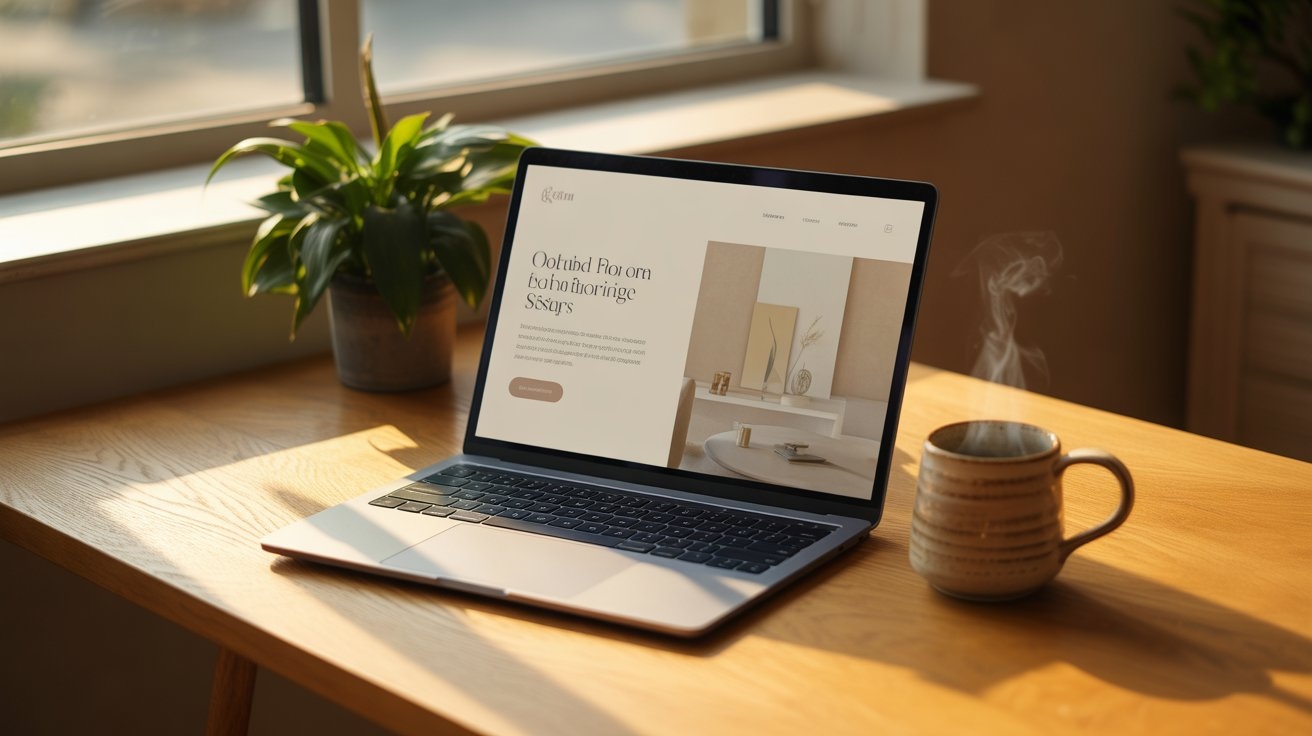
Did you know that 94% of first impressions on a website are design-related? In 2026, users are no longer just looking for efficiency; they are craving emotional connection. Gone are the days of clinical, cold, and purely utilitarian websites that felt like hospital waiting rooms. A new era has arrived, and it has a name: Warm Minimalism.
If you feel your site lacks soul or your bounce rates are stagnating despite clear navigation, it’s likely because your aesthetic no longer resonates with the current need for digital comfort. Warm Minimalism is design’s answer to technological saturation and the ubiquity of AI.
In this article, we will dissect this major web design trend of 2026. We’ll explore how to integrate it to humanize your brand, boost your SEO, and convert visitors into loyal customers—without ever sacrificing performance.
What is Warm Minimalism? (Topic Overview)
Warm Minimalism isn't just a visual trend; it’s a UX (User Experience) philosophy. To define it simply, it is the successful marriage between the simplicity of traditional minimalism (white space, clarity, functionality) and human warmth (organic textures, earthy colors, soft typography).
Why is it crucial today?
In 2026, the web is flooded with AI-generated content, often perceived as "perfect" but soulless. In reaction, internet users are gravitating toward interfaces that feel handcrafted, authentic, and soothing.
The data speaks for itself:
- Increased Retention: Sites using warm color palettes and airy layouts see an average 20% increase in time on page.
- User Trust: A "warm" aesthetic is psychologically associated with transparency and honesty—key values for modern consumers.
Unlike the "Brutalism" or "Y2K" trends of previous years, Warm Minimalism aims for longevity and digital well-being.
The 4 Strategic Pillars of Warm Minimalism
To successfully transition to this style without losing ergonomics, here are the essential strategies to deploy.
1. An "Earth and Skin" Color Palette
Forget pure white (#FFFFFF) and absolute black (#000000). These contrasts are too harsh for today's high-brightness screens.
- The Concept: Use off-whites, creams, beiges, terracotta, sage green, or mocha brown.
- Practical Tip: Replace your white backgrounds with an "eggshell white" (e.g., #FDFBF7). This reduces eye strain, a key factor in web accessibility (a11y).
- The Goal: Create a "digital sanctuary" atmosphere.
2. The Renaissance of Serif Typography
For a decade, "Sans-Serif" fonts dominated for their readability. Warm Minimalism reintroduces fonts with serifs, but with a modern twist.
- The Concept: Elegant and fluid Serif headlines paired with clean Sans-Serif body text.
- Practical Tip: Choose a headline font with personality (like Recoleta or a modern Garamond variant) to inject emotion instantly.
- Example: A home decor e-commerce site uses a bold Serif font for its slogans to evoke craftsmanship.
3. Organic Shapes and "Soft UI"
The rigidity of strict grids is fading in favor of fluidity.
- The Concept: Integrate rounded corners (high border-radius), asymmetric shapes, and layouts that "breathe."
- Practical Tip: Don't leave your images in strict rectangles. Use oval shape masks or soft borders.
- Micro-interactions: Buttons shouldn't flash nervously but "swell" or gently change hue on hover.
4. Texture and Depth (The Grain)
This is the secret to avoiding the "plastic" look of the classic web.
- The Concept: Add subtle noise or paper texture to the background.
- Practical Tip: Use CSS noise overlays at very low opacity (2-3%). This gives a tactile feel to the screen, reminiscent of high-quality printed paper.
- Warning: Ensure these textures do not weigh down page load time (Core Web Vitals).
Common Mistakes to Avoid (And how to fix them)
Adopting Warm Minimalism doesn't mean sacrificing clarity. Here are the frequent traps many designers fall into.
The "Beige Fatigue" Trap
If everything is beige, nothing stands out. A lack of visual hierarchy will kill your conversion rate.
- Don't: Use light gray text on a beige background (insufficient contrast).
- Do: Use a strong accent color (like deep terracotta or midnight blue) for Call to Action (CTA) buttons.
Neglecting White Space
"Warm" does not mean "cluttered."
- Don't: Fill every empty space with textures or illustrations.
- Do: Keep generous margins (padding). It is the empty space that gives the design its luxurious and calm appearance.
Inconsistent Imagery
- Don't: Use cold, overly posed stock photos or images saturated with corporate blue.
- Do: Choose photography with natural lighting, warm tones, or hand-drawn line art illustrations.
Tools and Resources for Warm Minimalism
To create these designs in 2026, you don't need to reinvent the wheel. Here is my selection of tools.
Coolors (Free/Paid): Excellent for generating warm color palettes. Use their "Extract from Image" feature on a photo of a Scandinavian interior to get the perfect base.
Spline (Freemium): For integrating 3D objects with soft, organic shapes. Spline allows you to create lightweight interactive elements that fit perfectly with the "Soft UI" style.
Typewolf (Resource): The reference for finding the best Serif and Sans-Serif font pairings. Check their "Site of the Day" section for current inspiration.
Grainy Gradients (Figma Plugin): If you use Figma, this plugin is indispensable for creating those textured and atmospheric gradients that define the style.
Case Study: The Redesign of "Luma & Co."
To illustrate the concrete impact of Warm Minimalism, let's look at the (anonymized) example of a recent client, an online lighting store, "Luma & Co."
The Problem: Their site dated back to 2020. Pure white background, Roboto font (very standard), images cut out without shadows. The site was functional, but the conversion rate stagnated at 1.2%. Users found the brand "cold" and "generic."
The Solution: We applied a complete redesign based on Warm Minimalism:
- Background: Switched to "Cream" (#F9F7F2).
- Typography: Adoption of an expressive Serif font for product titles.
- Images: Lamps placed in warm living room settings rather than on white backgrounds.
- UX: Softening of all buttons (border-radius: 12px).
The Results (after 3 months):
- Conversion Rate: Rose from 1.2% to 2.8% (more than double).
- Session Duration: Increased by an average of 1 minute 30 seconds.
- Feedback: Customers described the new brand as "high-end" and "welcoming" in post-purchase surveys.
This proves that aesthetics are not superficial; they dictate the perceived value of your products.
Conclusion
Warm Minimalism is not a simple step back into the past; it is the mature evolution of web design in 2026. It answers a fundamental human need for connection, calm, and authenticity in a noisy digital world.
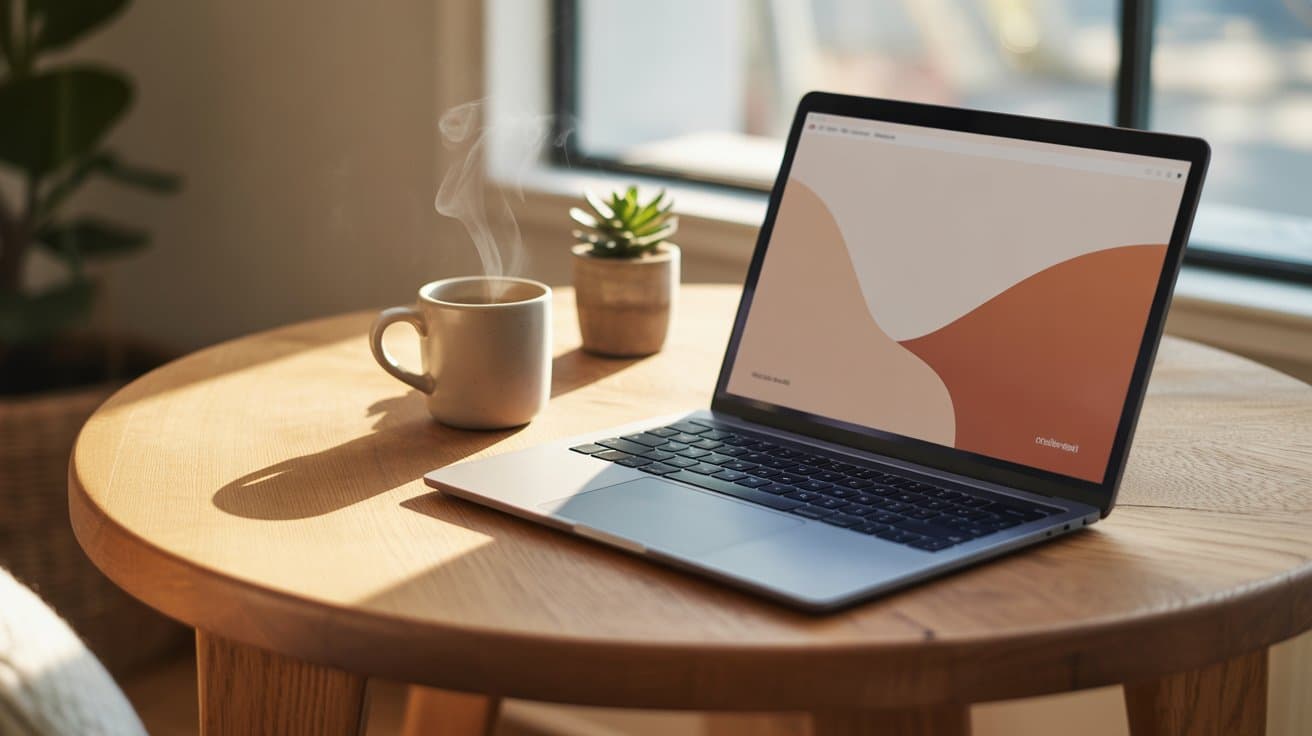
By adopting natural palettes, expressive typography, and letting your interfaces breathe, you are not just "decorating" your site. You are creating a space where your visitors feel good, confident, and ready to engage.
Your next step? Don't change everything overnight. Start by auditing your homepage. Replace pure white with a cream shade and round your buttons. Observe the impact on your metrics. The future of the web is warm; don't stay out in the cold.
FAQ on Warm Minimalism
1. Is Warm Minimalism suitable for B2B (Business to Business) sites? Absolutely. In 2026, even B2B is humanizing. A law firm or SaaS company can use this style to appear more accessible and less intimidating, while remaining very professional. You just need to balance the "warmth" (stick to sober neutral tones).
2. Will this style slow down my website? No, if done correctly. Warm Minimalism relies heavily on CSS (colors, borders, typography) which is very lightweight. The only risk lies in the excessive use of heavy image textures. Prioritize SVG and CSS for grain effects.
3. What is the difference between Warm Minimalism and Boho style? Boho is often maximalist, filled with patterns and objects. Warm Minimalism keeps the rigor of minimalism (few elements, lots of space) but changes the mood through color and material. It is "Less, but better and warmer."
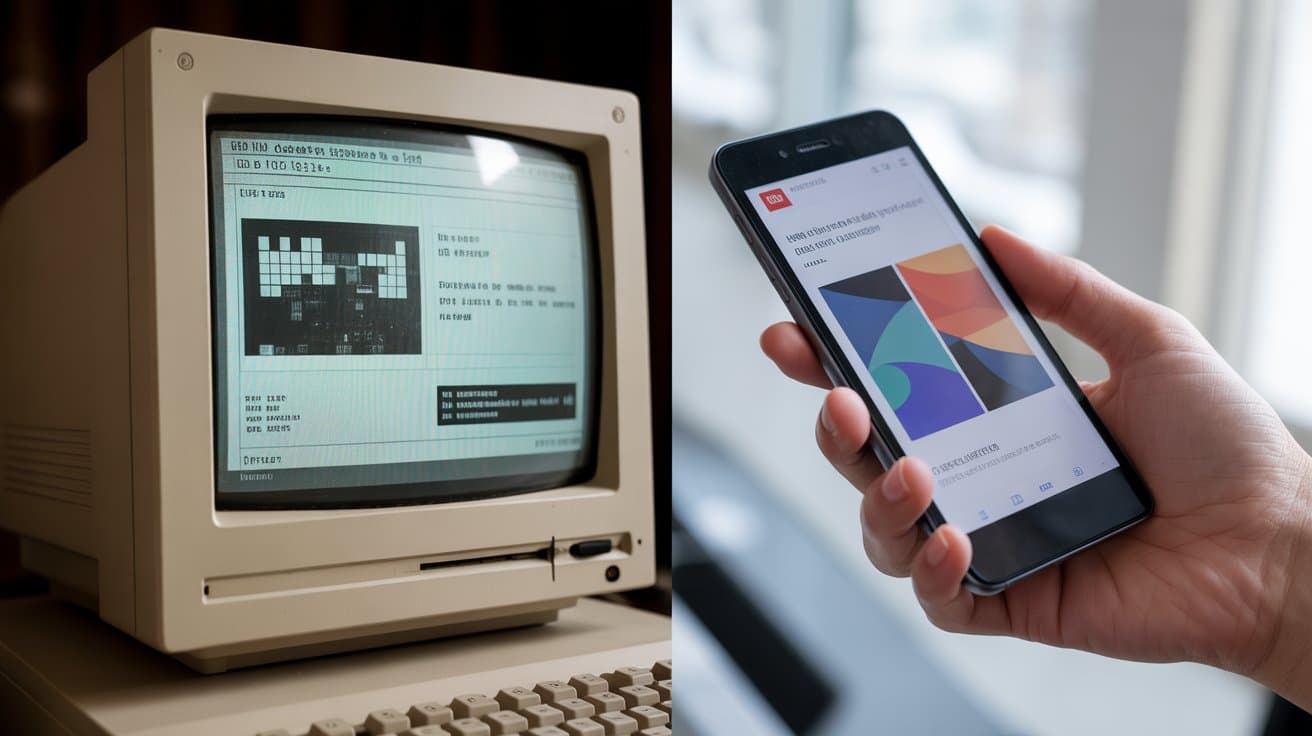
4. Is this a passing fad? No. It is a course correction. Web design reached a peak of technological "coldness." The return to more natural codes is a deep trend linked to our psychology, which should persist well beyond 2026.
Comments
Be the first to comment on this article.
Leave a Comment